
EDGE Pay Equity Analysis Methodology
Ensuring equal pay for equivalent work is a core principle of workplace fairness. The EDGE Pay Equity Analysis Methodology provides a scientific and globally recognized approach to determining whether women and men are paid fairly for the work they do. Built on rigorous statistical principles and aligned with emerging international regulations, it offers organizations a clear, credible, and actionable assessment of pay equity.
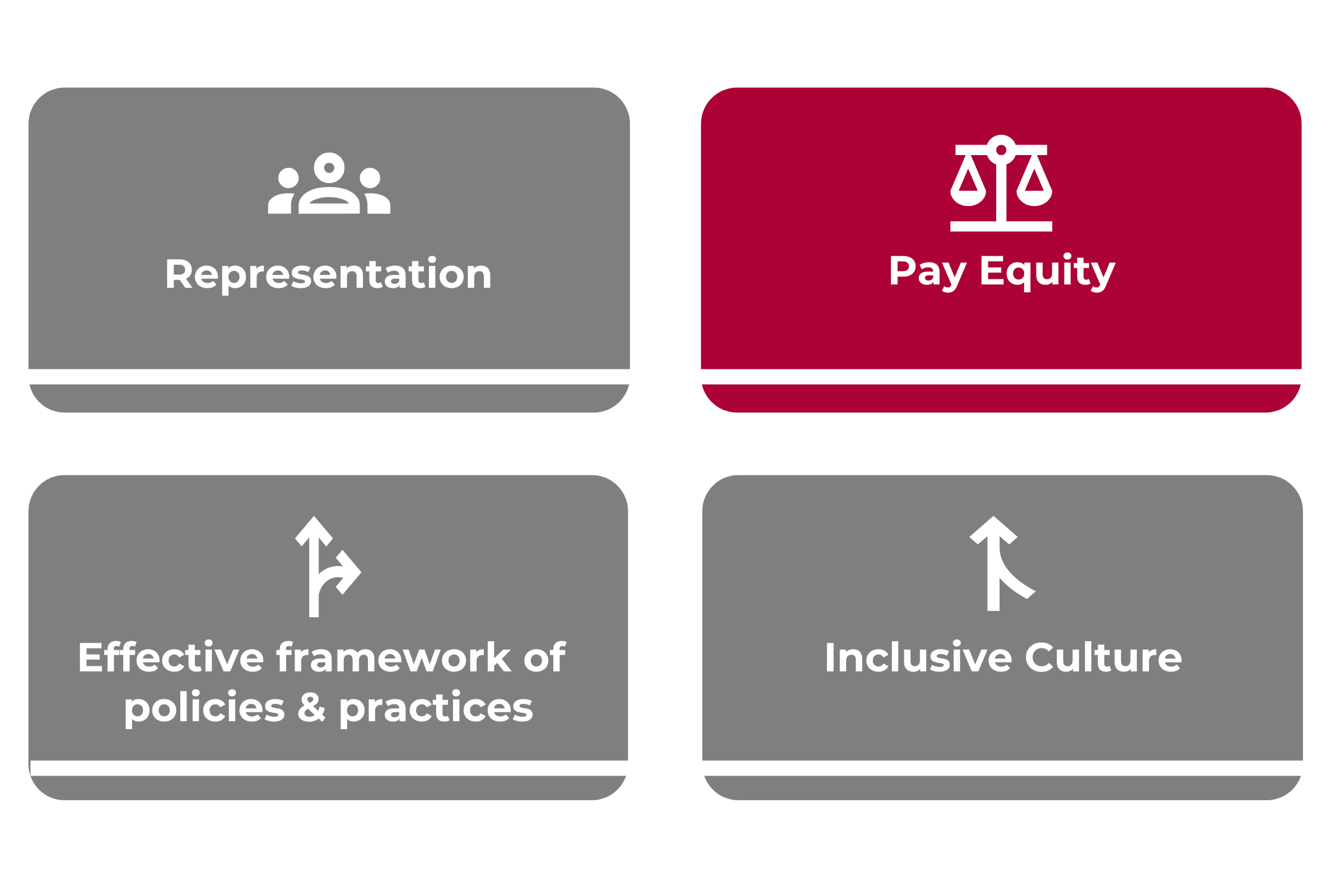
What Is Pay Equity Analysis?
Pay Equity ensures that individuals performing substantially equal work within the same organization receive equal remuneration, regardless of their gender.
Pay Equity is important to attract and retain talented employees, to increase employee productivity and morale, to foster a culture of fairness in the workplace, to comply with equal pay regulations, and to prevent discrimination lawsuits.
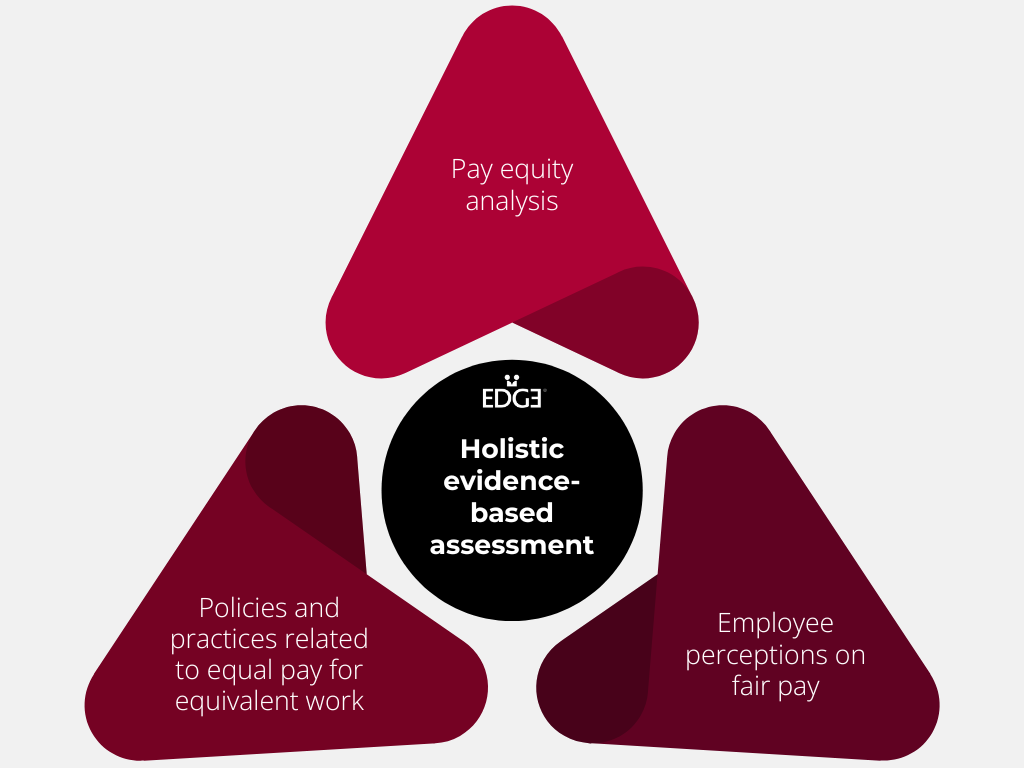
Gender pay equity analysis examines whether any gender-based pay differences remain after accounting for objective and relevant job-related factors and personal characteristics such as tenure, role, and responsibility level. The analysis goes beyond raw pay gaps to determine whether gender, on its own, has a measurable impact on pay outcomes. The EDGE approach assesses:
- Pay gap – assessing the pay data; identifying whether any portion of pay differences cannot be explained by objective factors
- Policies and practices – evaluating policies and practices related to equal pay for equivalent work and the maturity of implementation
- Employee experience – analysing how employees perceive pay equity within their organization
This triangulation of three sources of information provides a rigorous, holistic, and evidence-based view of an organization’s pay equity performance.
A Scientific, Regression-Based Approach
The EDGE Pay Equity Analysis Methodology uses a linear regression model (Ordinary Least Squares) to determine whether an organization has any unexplained gender pay gaps. It isolates the relationship between gender and pay by controlling for objective, non-discriminatory variables.
The analysis includes:
- All employees. Note, organizations must have a minimum 100 observations
- Salary (base salary) and overall pay (base salary plus bonuses and other cash benefits).
- Explanatory variables such as:
- Age
- Tenure
- Responsibility of the role
- Type of performed function
- Level of responsibility
- Outcomes showing whether gender has a statistically significant effect on pay
This method offers a transparent and defensible measure of pay equity.
The ±5% Tolerance Threshold
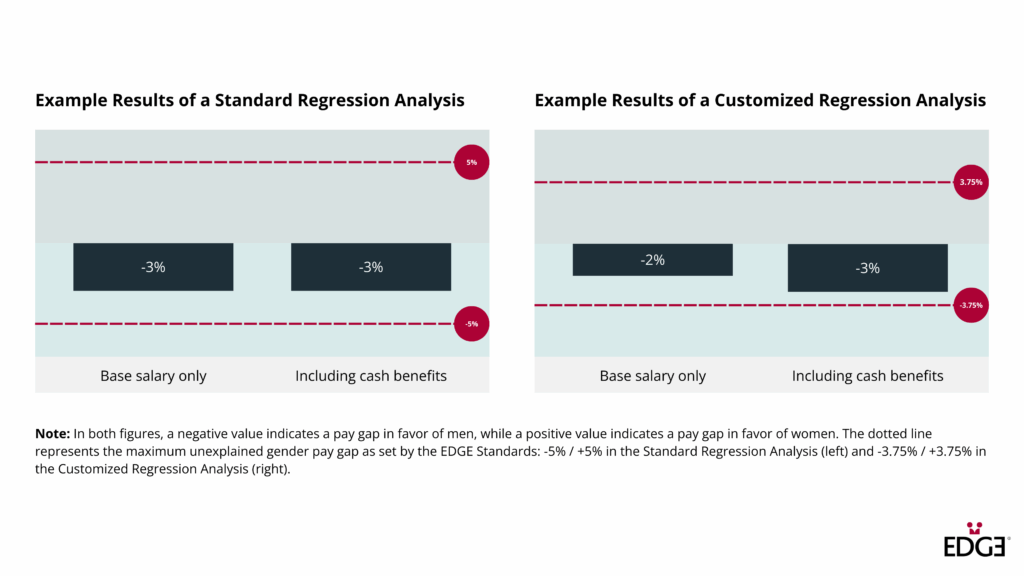
EDGE Certification applies a tolerance threshold of ±5% when interpreting the results of the regression analysis. This means that to meet the EDGE Standards, the unexplained gender pay gap shall be between plus or minus 5% for a Standard Regression Analysis. Originally defined by the Swiss Confederation for its public procurement rules, this threshold is now mirrored in emerging pay equity regulations around the world. For example, in 2023, the EU Directive on pay equity and transparency also established the same tolerance threshold of 5% for this indicator. Gaps beyond ±5% generally require investigation and action.
EDGE Pay Equity Analysis Methodology for Smaller Organizations
To support organizations of different sizes, the EDGE Certified Foundation has developed adapted versions of the methodology for:
- Small and micro-sized organizations (30–49 employees)
- Small and medium-sized organizations (50–99 employees)
These tailored approaches ensure statistical validity while preserving analytical robustness in smaller datasets.
EDGEplus: Intersectional Pay Equity Analysis
The EDGEplus Pay Equity Analysis Methodology evaluates whether any unexplained pay gaps exist between women and men of different races/ethnicities. The methodology extends the standard regression model by incorporating intersectional variables, enabling organizations to identify specific pay disparities experienced by women and men belonging to under-represented groups.
Global Compliance and Regulatory Context
The EDGE Pay Equity Analysis Methodology supports alignment with regulatory expectations in jurisdictions where pay transparency and equal pay legislation is advancing and is prescriptive, including:
- European Union – EU Pay Transparency Directive and EU CSRD
- Switzerland – Federal equal pay analysis requirements
- Brazil – Gender Pay Equity Law
- Japan – APWPAW reporting obligations
The methodology provides a robust and internationally relevant approach to analysing gender pay gaps in accordance with these legal frameworks.
Access the Full Methodology
The detailed EDGE Pay Equity Analysis Methodologies are available for download:
- EDGE Pay Equity Analysis Methodology
- EDGE Pay Equity Analysis Methodology (French)
- EDGE Pay Equity Analysis Methodology (Spanish)
- EDGEplus Pay Equity Analysis Methodology
- EDGE Pay Equity Analysis Methodology for Small and medium-sized organizations (50–99 employees)
- EDGE Pay Equity Analysis Methodology for Small and micro-sized organizations (30–49 employees)
These resources offer complete technical guidance on implementing the analysis.
Advancing Pay Equity Through Evidence and Action
The EDGE Pay Equity Analysis Methodology provides organizations with a clear, scientifically robust, and globally relevant approach to measuring pay equity. Organizations can use the methodology to support compliance, strengthen internal processes, and benchmark their progress toward fair and equitable compensation practices.
For deeper perspectives on why rigorous pay equity measurement matters, explore our thought leadership:
- The Global Shift to Brutal Pay Transparency – Why increased visibility is reshaping employer accountability and accelerating action on gender pay gaps.
- Pay Equity Is Not Enough – Why achieving equal pay is only the starting point and why organizations must address the structural drivers behind persistent gender gaps.
- Measure It. Talk About It. Close It. – a practical guide to creating the conditions for organizations to identify, understand, and close pay gaps.
EDGE Empower® Pay Tool
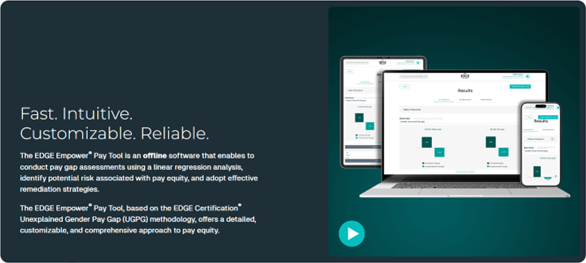
The EDGE Empower® Pay Tool is an offline software solution that enables organizations to conduct pay equity analyses, identify potential pay gap risks and implement effective remediation strategies. It safeguards sensitive personal data, using a dedicated access token and secure environment. This ensures compliance with data protection standards while applying the EDGE Pay Equity Analysis Methodology
→ Learn more about the EDGE Empower® Pay Tool
Using Pay Equity Analysis Tools
Several external pay equity analysis providers offer pay tools that have been independently validated as capable of generating EDGE-compliant results that may be used as part of the EDGE Certification process. Therefore, by completing one of the four fundamental pillars of EDGE Certification, organizations using solutions from these provider have a head start on becoming EDGE Certified.