For decades, the gender pay gap in Europe has proven stubbornly resistant to change. Despite widespread commitments to equal pay, progress has been slow, uneven, and difficult to sustain. The EU Pay Transparency Directive marks a clear shift towards enforceable, evidence-based accountability.
Rather than treating pay equity as a one-off reporting exercise, the EU Pay Transparency Directive reframes it as an ongoing management responsibility, one that must be measurable, explainable, and defensible over time.
What the EU Pay Transparency Directive Requires
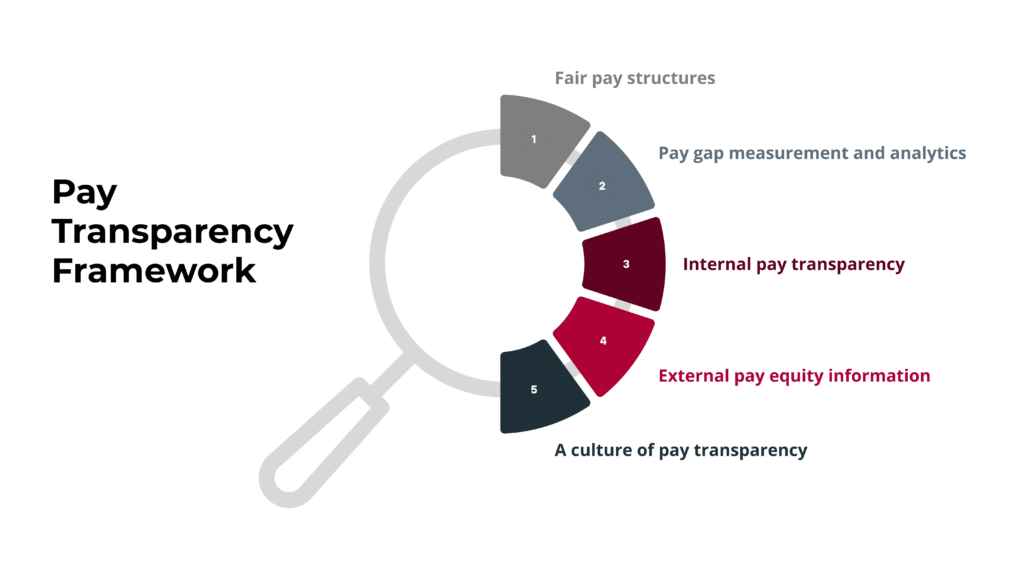
As illustrated in the framework, the EU Pay Transparency Directive brings together several interdependent elements: pay structures grounded in objective, gender-neutral job evaluation, standardized pay gap measurement and analysis, transparency before and during employment, both internally and externally, and the establishment of a culture of pay transparency.
Crucially, these elements reinforce one another. Publishing pay gap figures without robust job architecture, clear pay criteria, or consistent processes does little to reduce inequality. Instead, it increases exposure to financial, legal, and reputational risk. The EU Pay Transparency Directive makes clear that transparency must be underpinned by systems that can explain outcomes and support corrective action where needed.
Timing Matters
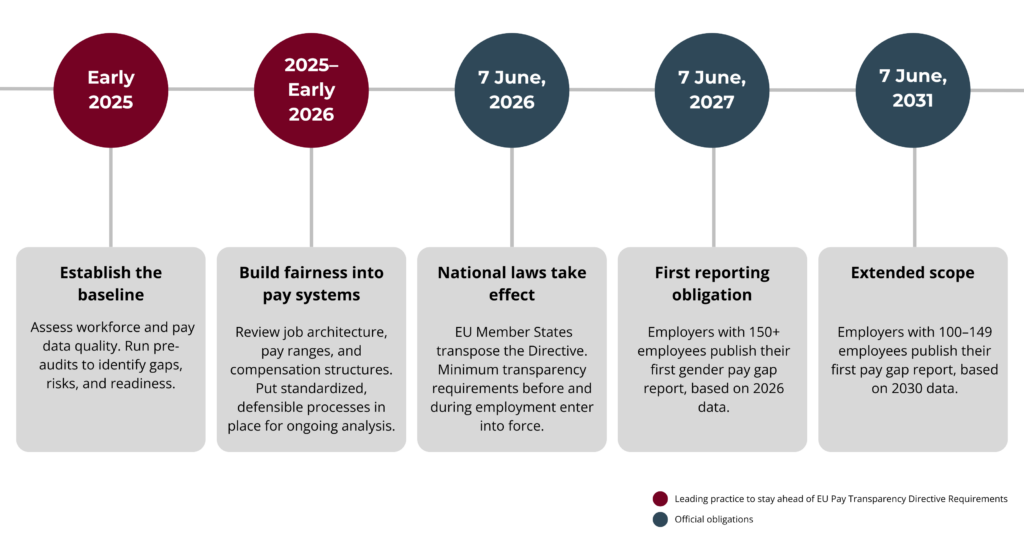
The timeline highlights that the preparation window for organizations is narrow. While EU Member States must transpose the Directive into national law by 7 June 2026, the first reporting obligations for large employers are based on 2026 pay data.
Leading organizations are already using this period to test pay analyses, address data gaps, review job architectures, and strengthen governance before results become public and actionable. Tools and methodologies that support structured, audit-ready pay analysis can help organizations prepare in a consistent and defensible way.
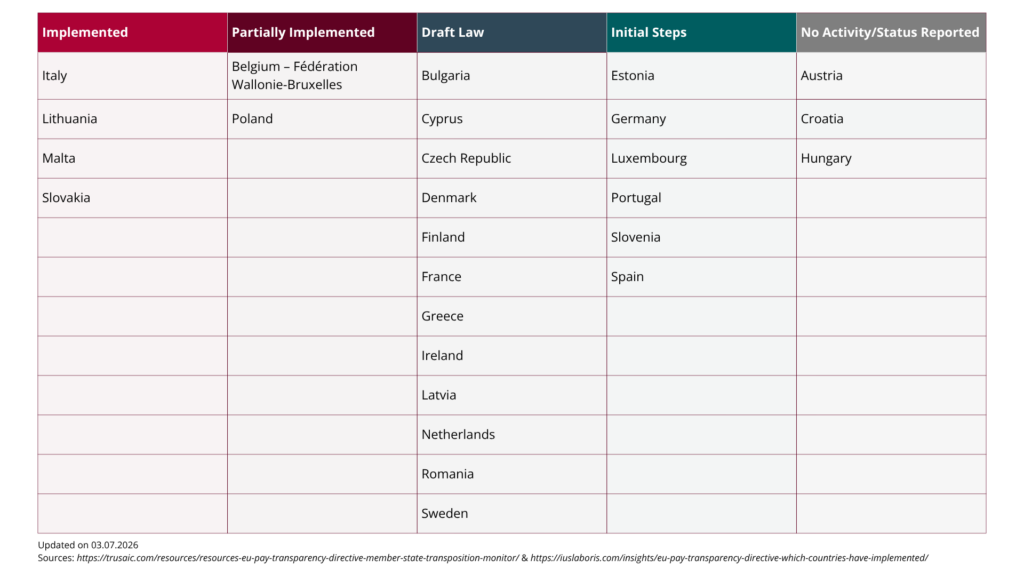
Implementation is progressing at different speeds across the 27 EU Member States, as shown in the table. Some countries have already published draft legislation, while others have taken only initial steps. Nevertheless, these differences do not change the underlying direction of travel.
Regardless of national timelines, minimum expectations around evidence quality, defensibility, and transparency are now clear. Employees, regulators, and other stakeholders will increasingly assess organizations against comparable standards of rigour, even where local requirements differ.
Organizations that respond by building robust, evidence-based pay systems will not only meet regulatory expectations, they will build trust, credibility, and resilience in an environment where transparency is no longer optional, but expected.
EDGE Certification® provides an independently verified framework, aligned with the principles of the EU Pay Transparency Directive, enabling organizations to measure unexplained pay gaps, assess pay equity across their pay systems and employee experience, and demonstrate progress against clear, globally recognized standards.
This article was originally published on 3 February 2026. It is regularly updated. The last update was on 3 July 2026.