
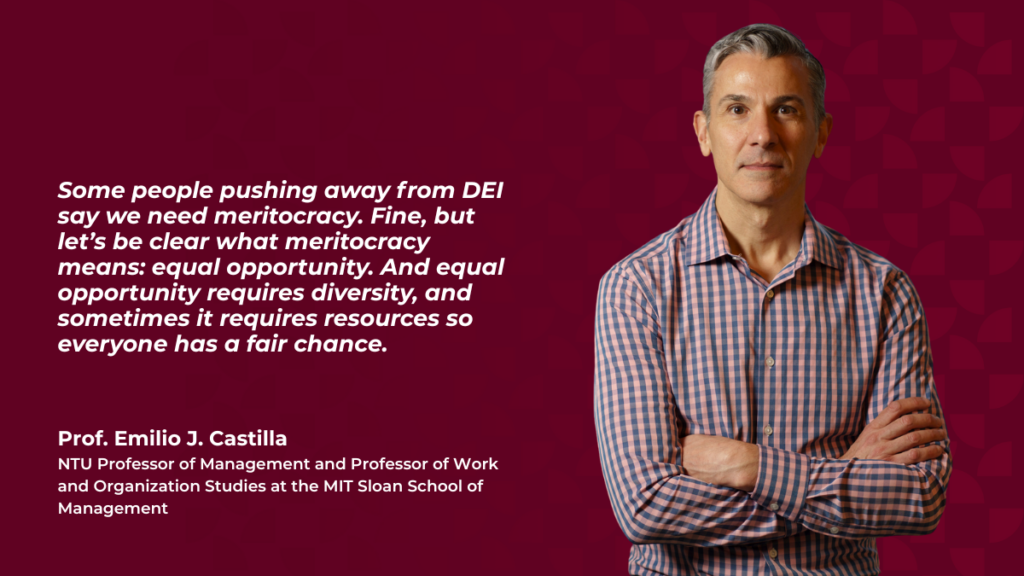
In this EDGEtalks, Aniela Unguresan (Founder of the EDGE Certified Foundation) welcomed Prof. Emilio J. Castilla (NTU Professor of Management and Professor of Work and Organization Studies at MIT Sloan School of Management) for a practical conversation on why merit-based talent systems so often fail to deliver fairness, and what leaders can do to fix them.
Prof. Emilio J. Castilla’s core message was: there is no meritocracy without opportunity. Meritocracy, he explained, isn’t just about rewarding performance. It also depends on whether people have a real, equal chance to access roles, development, and advancement. When that second condition is missing, “meritocracy” can end up reinforcing inequality rather than reducing it.
He described the “meritocracy paradox”: when organizations strongly believe their systems are objective and fair, they often become less vigilant about bias, “noise,” and flawed criteria. Having a process is not the same as proving it works, and many organizations rarely monitor outcomes closely enough to see where things go wrong.
Prof. Emilio J. Castilla shared several practical fixes that can make meritocracy work better in real workplaces: set clear, job-relevant criteria for hiring and promotion (and avoid overbuilt “elite” requirements); build accountability through monitoring and review; and expand opportunity by widening talent pools and ensuring people have the resources to succeed once they’re in.
He closed with a takeaway for leaders at any level: you may not be able to redesign the whole system tomorrow, but you can start with small interventions: asking better questions, tightening criteria, and measuring outcomes in your own area of influence.